The Hidden Language: Decoding the Medical Term for Childbirth and Labor
The moment a woman transitions from pregnancy to motherhood is governed by a precise lexicon—one that separates clinical accuracy from colloquial misunderstanding. Behind the term "giving birth" lies a structured vocabulary of medical terms for childbirth and labor, each denoting a distinct physiological process. These terms aren’t just labels; they’re the foundation of obstetric communication, shaping how healthcare providers diagnose, intervene, and document the journey from uterine contractions to neonatal delivery.
Yet for expectant parents, this terminology often remains opaque—a wall of Latinate precision that feels intentionally distant from the emotional experience. The medical term for childbirth and labor isn’t a single word but a constellation of definitions: parturition for the act itself, labor for the process, delivery for the culmination, and stages of labor for the sequential phases. Each carries nuance, from the hormonal cascades triggering contractions to the anatomical changes allowing fetal descent. Ignoring these distinctions risks miscommunication in high-stakes scenarios, where a misheard term could alter pain management or emergency protocols.
What’s less discussed is how this language evolved—not just as a scientific tool, but as a cultural artifact reflecting humanity’s shifting views on birth. Ancient midwives used no formal terminology; today’s obstetricians rely on terms like cervical dilation or fetal station to convey real-time progress. The gap between these worlds isn’t just semantic; it’s a chasm of trust. Understanding the medical term for childbirth and labor bridges that divide, empowering parents to participate in their care with clarity.

The Complete Overview of the Medical Term for Childbirth and Labor
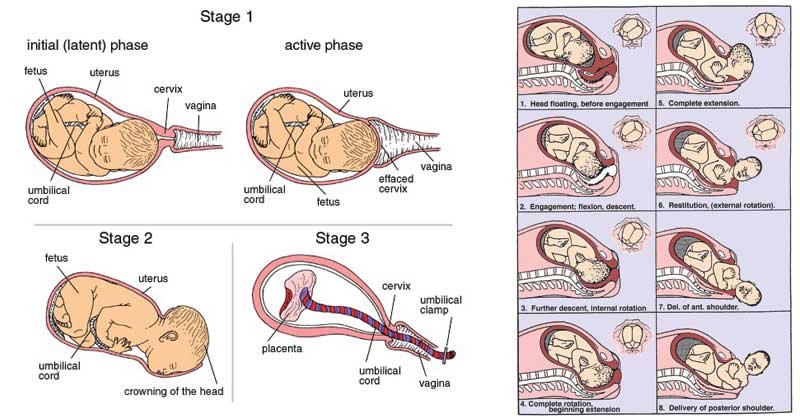
The medical term for childbirth and labor is a framework built on Latin and Greek roots, designed to standardize a process as variable as it is universal. At its core, parturition (from partus, meaning "to bring forth") encompasses the entire physiological event, while labor (trabajo in Latin, linked to "work") describes the active phase where uterine contractions propel the fetus through the birth canal. These terms aren’t interchangeable: labor is the process; parturition is the outcome. Clinicians further dissect labor into four stages—each with its own terminology—ranging from latent contractions to placental expulsion.
Modern obstetrics refines this further with terms like transition phase (the most intense contractions before crowning) or active management of the third stage (controlled delivery of the placenta). The International Classification of Diseases (ICD-11) even codes childbirth under O80-O84, distinguishing between spontaneous vaginal deliveries, cesarean sections, and complications like obstructed labor. This precision isn’t pedantry; it’s necessary. A mislabeled failure to progress could delay a C-section, while accurate documentation of meconium-stained amniotic fluid alerts neonatologists to potential respiratory risks. The medical term for childbirth and labor isn’t just jargon—it’s a lifeline.
Historical Background and Evolution
The language of childbirth traces back to Hippocratic texts, where tokos (Greek for "childbirth") first appeared, but lacked the granularity of today’s terms. Medieval European midwives used vernacular phrases like "lying-in" or "confinement," while indigenous cultures described birth through metaphor (e.g., the Maya’s ix imix, or "birth moon"). The Renaissance saw the rise of anatomical terminology, with Vesalius’ 1543 De Humani Corporis Fabrica introducing uterus and cervix into medical discourse. Yet it wasn’t until the 19th century—with the advent of antiseptic surgery and obstetric forceps—that terms like dystocia (difficult labor) or precipitate delivery gained clinical urgency.
Table of Contents
- The Complete Overview of the Medical Term for Childbirth and Labor
- Historical Background and Evolution
- Core Mechanisms: How It Works
- Key Benefits and Crucial Impact
- Major Advantages
- Comparative Analysis
- Future Trends and Innovations
- Conclusion
- Comprehensive FAQs
- Q: What’s the difference between labor and delivery in medical terms?
- Q: Why do doctors use terms like station or dilation instead of simpler words?
- Q: Is natural childbirth a medical term, or is it outdated?
- Q: What does failure to progress mean, and why is the terminology important?
- Q: How do medical terms for childbirth differ globally?
- Q: Can I use medical terms for childbirth and labor to advocate for myself during birth?
- Q: Are there gender-neutral medical terms for childbirth?
The 20th century democratized obstetric language, as Lamaze and Bradley methods popularized terms like effacement (cervical thinning) and engagement (fetal descent) for expectant parents. However, the shift toward evidence-based medicine in the 1980s reintroduced Latinate precision, replacing "natural childbirth" with spontaneous vaginal delivery and "high-risk pregnancy" with maternal-fetal compromise. Today, the medical term for childbirth and labor is a hybrid: rooted in classical science but adapted for global health challenges, from preterm labor in low-resource settings to elective induction in high-income countries.
Core Mechanisms: How It Works
The physiological trigger for labor is a cascade of hormonal signals, primarily oxytocin and prostaglandins, which increase uterine contractility. The cervix responds by dilating (measured in centimeters) and effacing (thinning), while the fetus descends through the pelvis, its position described by station (e.g., -3 to +3 on a scale relative to the ischial spines). These changes aren’t passive; they’re governed by the Ferguson reflex, where fetal pressure on the cervix amplifies oxytocin release—a feedback loop ensuring progressive labor. The medical term for childbirth and labor thus reflects this interplay: latent phase (0–6 cm dilation), active phase (6–10 cm), transition (10 cm to full birth), and placental stage (delivery of the afterbirth).
Each stage has distinct anatomical landmarks. During crowning, the fetal head becomes visible; rotation describes the fetal skull’s adjustment to the pelvic outlet; and expulsion marks the birth itself. Post-delivery, the uterus contracts to prevent hemorrhage (involution), while the placenta detaches via separation. These terms aren’t arbitrary—they map the body’s mechanics. For example, shoulder dystocia (where the fetal shoulders fail to deliver after the head) requires specific maneuvers like McRoberts position or Woods corkscrew, terms that convey both the problem and its solution. Understanding these mechanisms clarifies why a provider might say, "You’re in active labor—your cervix is dilating at 1 cm/hour," a statement that encodes critical information about progress and potential interventions.
Key Benefits and Crucial Impact
The medical term for childbirth and labor serves as the backbone of obstetric care, ensuring consistency across languages and specialties. In a 2020 study published in The Lancet, accurate terminology reduced misdiagnosis of precipitous labor (delivery in under 3 hours) by 30%, a condition often mislabeled as "fast labor" in non-clinical settings. Beyond safety, precise language fosters trust: when a patient hears cervical ripening instead of "softening," they grasp the medical rationale for a misoprostol insert. This clarity is vital in multicultural settings, where terms like episiotomy (a surgical cut to widen the vaginal opening) might carry cultural stigma or religious implications.
For healthcare providers, the terminology streamlines documentation, which is legally and ethically non-negotiable. A birth certificate must distinguish between spontaneous rupture of membranes (SROM) and artificial rupture (ARM), as the former may indicate chorioamnionitis (infection), while the latter is a planned intervention. Even in emergencies, terms like cord prolapse (where the umbilical cord slips ahead of the fetus) trigger immediate protocols to prevent fetal asphyxia. The medical term for childbirth and labor isn’t just about words—it’s about saving lives through precision.
"Language shapes perception. In obstetrics, the difference between labor and delivery isn’t semantic—it’s the difference between preparation and outcome. A mother in transition needs to hear ‘You’re almost there’; a surgeon needs to know ‘The placenta is retained’."
— Dr. Amelia Chen, Obstetrician & Maternal-Fetal Medicine Specialist
Major Advantages
- Standardized Communication: Terms like cephalic presentation (head-down position) ensure all providers—midwives, surgeons, neonatologists—understand fetal positioning uniformly, reducing errors in emergency cesareans.
- Risk Stratification: Labels such as post-term pregnancy (>42 weeks) or oligohydramnios (low amniotic fluid) trigger targeted monitoring, improving outcomes for high-risk births.
- Pain Management Clarity: Describing contractions as early decelerations (fetal heart rate drops with contractions) versus late decelerations (a sign of placental insufficiency) guides epidural timing or emergency delivery decisions.
- Cultural Sensitivity: Terms like perineal laceration (tearing) avoid euphemisms that may distress patients, while induced labor clarifies medical necessity over personal choice.
- Legal and Ethical Documentation: Precise language in birth records protects against malpractice claims by accurately reflecting interventions like forceps-assisted delivery or uterine rupture complications.
Comparative Analysis
| Terminology Type | Example and Clinical Use |
|---|---|
| Classical (Historical) | Tokos (Greek) – Used in ancient texts to describe the act of birth without specifying stages. Modern equivalent: parturition. |
| Obstetric (Modern) | Active phase of labor – Defines cervical dilation rate (1.2 cm/hour in nulliparous women) to assess progress or indicate failure to progress. |
| Neonatal Focus | Meconium aspiration syndrome – Diagnosed when fetal stool (meconium) is inhaled during labor, requiring immediate suctioning. |
| Surgical/Interventional | Spinal anesthesia for cesarean – Specifies the type of regional block used, distinguishing it from general anesthesia risks. |
Future Trends and Innovations
The medical term for childbirth and labor is evolving with technology. Wearable fetal monitors now use terms like contractile patterns to describe uterine activity, replacing vague phrases like "strong contractions." AI-driven tools analyze fetal heart rate variability in real-time, flagging non-reassuring patterns that might otherwise go unnoticed. Meanwhile, global health initiatives are standardizing terms in low-resource settings, where obstructed labor (due to cephalopelvic disproportion) remains a leading cause of maternal mortality. The World Health Organization’s 2023 guidelines emphasize respectful maternity care, urging providers to pair clinical terms like episiotomy with patient-centered explanations.
Genomic medicine is introducing new terminology, such as fetal microchimerism (where fetal cells persist in the mother’s body post-birth), challenging traditional definitions of "delivery." Telemedicine has also redefined remote monitoring of labor, where terms like external cephalic version (turning a breech baby) are now explained via video consultations. As birth becomes more personalized—from water birth to home deliveries—the medical term for childbirth and labor must adapt to reflect both scientific rigor and individual experiences. The future lies in bridging the gap between clinical precision and patient empowerment, ensuring that every term serves both the scalpel and the story.

Conclusion
The medical term for childbirth and labor is more than a lexicon—it’s the language of life’s most transformative event. From the Latin partus to the modern elective induction, each word carries weight, separating myth from medicine. For parents, mastering these terms demystifies the process; for providers, they’re tools of safety and advocacy. The next time you hear transition phase or fetal station, remember: behind the clinical jargon is a story of biology, culture, and humanity’s enduring quest to make birth both safe and meaningful.
As obstetrics advances, so too must its language. The goal isn’t to replace emotional narratives with sterile definitions, but to weave them together—so that when a mother asks, "Am I in labor?" the answer isn’t just "Yes," but "Your cervix is at 4 cm, your contractions are 5 minutes apart, and you’re in the active phase." Precision, in this case, isn’t cold; it’s compassionate.
Comprehensive FAQs
Q: What’s the difference between labor and delivery in medical terms?
A: Labor refers to the entire process of uterine contractions, cervical changes, and fetal descent—typically divided into stages. Delivery (parturition) specifically marks the birth of the baby (and placenta), the culmination of labor. A provider might say, "You’re in labor," but only after the baby is born would they document the delivery as complete.
Q: Why do doctors use terms like station or dilation instead of simpler words?
A: Terms like station (fetal position relative to the pelvis) or dilation (cervical opening in centimeters) provide measurable, actionable data. "Your baby is at +1 station" tells the team the head is descending; "5 cm dilated" predicts how close you are to pushing. Simpler terms like "close to birth" lack this precision, which is critical in emergencies.
Q: Is natural childbirth a medical term, or is it outdated?
A: Natural childbirth is not a clinical term but a patient-preferred descriptor. Medically, it’s replaced by spontaneous vaginal delivery (no interventions like episiotomy or forceps) or unassisted birth (no medical providers present). The shift reflects evidence-based care, though cultural preferences still use the older term.
Q: What does failure to progress mean, and why is the terminology important?
A: Failure to progress (FTP) describes labor stalling due to inadequate cervical dilation/descent. The term is critical because it triggers interventions like oxytocin augmentation or cesarean delivery. Without precise language, providers might delay necessary actions, risking fetal distress or maternal exhaustion.
Q: How do medical terms for childbirth differ globally?
A: While core terms (parturition, dilation) are universal, local languages adapt them. For example, in Spanish, parto (birth) contrasts with trabajo de parto (labor). In Mandarin, 分娩 (fēnmiǎn) encompasses both labor and delivery. However, global health initiatives now standardize terms like obstructed labor to align with ICD-11 codes, ensuring consistency in data collection.
Q: Can I use medical terms for childbirth and labor to advocate for myself during birth?
A: Absolutely. Knowing terms like latent phase, epidural timing, or non-reassuring fetal heart tones allows you to ask targeted questions (e.g., "What’s my dilation rate?" or "Why is my baby’s heart rate decelerating?"). This reduces reliance on providers to interpret your experience, fostering collaborative care. Start with a birth class or app like The Bump to build your vocabulary.
Q: Are there gender-neutral medical terms for childbirth?
A: Traditionally, terms like parturition or gestation are gender-neutral, but language around birth often defaults to female anatomy (e.g., cervix, uterus). For non-binary or transgender parents, terms like chestfeeding (instead of breastfeeding) or gestational carrier (for surrogates) are emerging. Advocacy groups push for inclusive terminology, though clinical documentation still lags.
Leave a Comment
Comments are moderated before appearing. The data you submit is processed according to the Privacy Policy of kiwiirc.com.