why is it yellow outside and what causes it
When the sky turns an eerie yellow, it is not merely an unusual spectacle but a visible warning sign of what lies unseen in the air. This phenomenon, often dismissed as a fleeting oddity, reveals deeper truths about atmospheric chemistry, human activity, and the delicate balance of Earth’s environment. From the smog-choked streets of Delhi to the wildfire-plagued skies of California, yellow skies serve as a stark reminder of how pollutants, dust, and natural forces collide to alter the very colors of our atmosphere.
The yellow hue is no accident; it is the result of complex interactions between sunlight and microscopic particles suspended in the air. Particulate matter, aerosols, and chemical pollutants scatter and absorb light in ways that transform the sky’s usual blue into a muted, yellowish glow. Understanding this process requires peeling back the layers of science—from the physics of light scattering to the industrial and natural sources that inject these particles into the atmosphere. What begins as a curiosity often unfolds into a story of environmental degradation, public health risks, and the urgent need for solutions.

The Science Behind a Yellow Sky: Atmospheric and Environmental Factors

The phenomenon of a yellow-tinted sky is not merely an aesthetic anomaly but a visible manifestation of complex atmospheric interactions. When sunlight encounters a sky tinged with yellow, it signals the presence of elevated levels of particulate matter, aerosols, and pollutants that alter the way light scatters and absorbs within the Earth’s atmosphere. Understanding this process requires dissecting the roles of Rayleigh and Mie scattering, the chemical composition of pollutants, and the geographical conditions that amplify such occurrences. These factors collectively transform a clear blue sky into one dominated by hues of yellow, orange, or brown, often serving as an early warning for air quality degradation.
Particulate Matter and Aerosols: The Primary Culprits of Yellowing
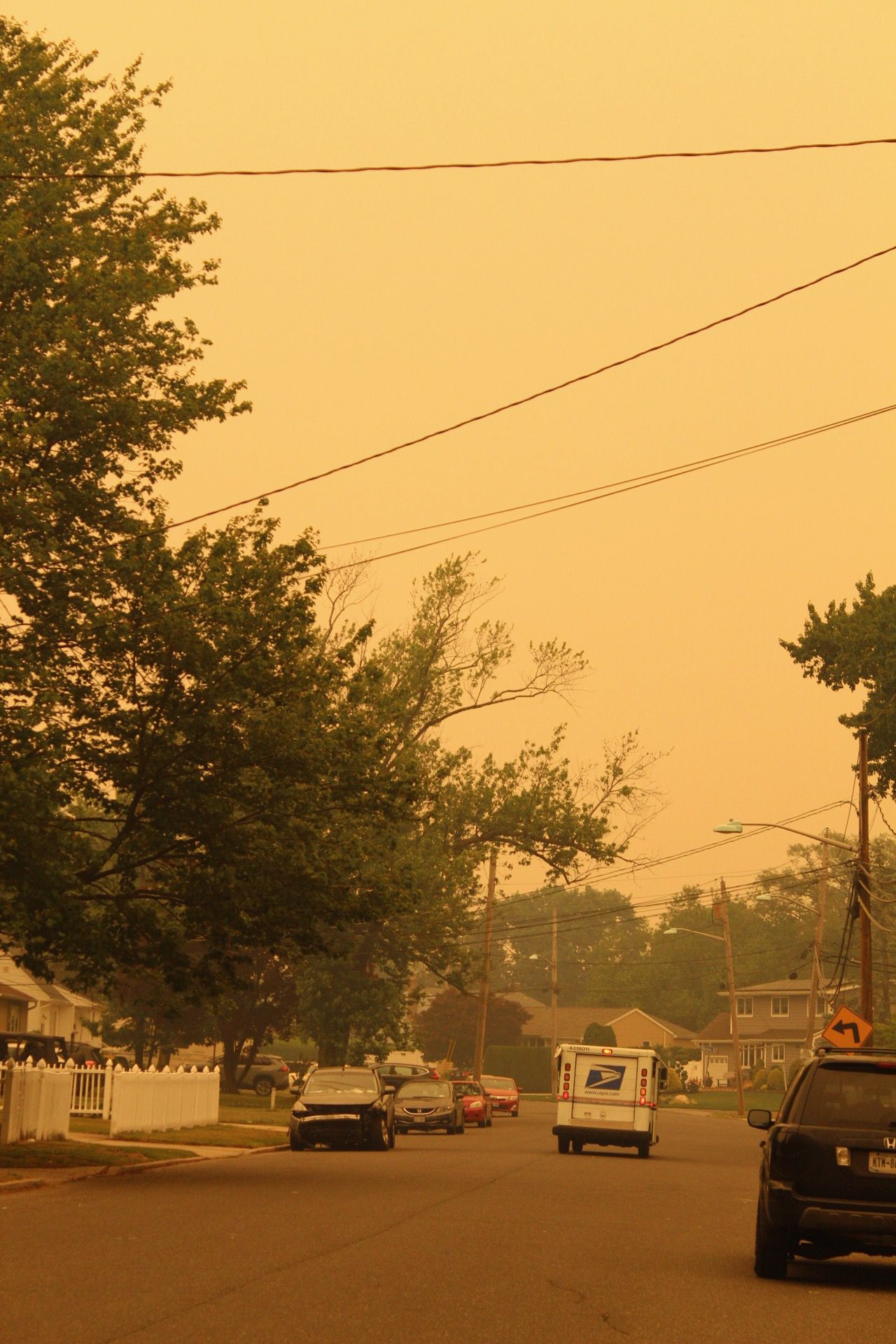
The yellowing of the sky is predominantly driven by particulate matter (PM2.5 and PM10) and aerosols, which are microscopic solid or liquid particles suspended in the air. PM2.5 refers to particles with a diameter of 2.5 micrometers or less, while PM10 includes those up to 10 micrometers. These particles originate from diverse sources, including wildfire smoke, industrial emissions, vehicular exhaust, construction dust, and natural phenomena like desert dust storms. Aerosols, such as sulfate and nitrate particles, further enhance the yellow tint by reflecting and scattering sunlight differently than clean air molecules.
The chemical composition of these particles often includes black carbon (soot), organic carbon, ammonium, and inorganic ions like sulfate (SO₄²⁻) and nitrate (NO₃⁻). When sunlight interacts with these particles, shorter wavelengths (blue and violet) are scattered out of the line of sight, while longer wavelengths (yellow, orange, and red) dominate the visible spectrum. This selective scattering is governed by Mie scattering, which is more effective for larger particles compared to the Rayleigh scattering that dominates in clean, particle-free skies.
Sunlight Scattering Dynamics: Rayleigh vs. Mie Scattering in Polluted Skies
In a clear sky, Rayleigh scattering causes the blue hue by preferentially scattering shorter wavelengths (400–500 nm) of sunlight. However, when particulate matter and aerosols are abundant, Mie scattering takes over, influencing all wavelengths of visible light more uniformly. The table below outlines the key differences between these scattering mechanisms and their effects on sky color:
Table of Contents
- The Science Behind a Yellow Sky: Atmospheric and Environmental Factors
- Particulate Matter and Aerosols: The Primary Culprits of Yellowing
- Sunlight Scattering Dynamics: Rayleigh vs. Mie Scattering in Polluted Skies
- Chemical Composition of Pollutants and Their Role in Yellow Sky Formation
- Step-by-Step Visualization: How Pollutants Transform Sunlight into a Yellow Sky
- Comparative Analysis: Clear Sky vs. Yellow Sky Light Absorption and Scattering
- Human-Made Causes: Pollution and Industrial Activities Driving Yellow Skies
- Top Five Human Activities Contributing to Yellow Skies Globally
- Mechanisms: How Pollutants Transform Skies Yellow
- Before-and-After Data: Pollution Control Measures and Yellow Sky Reduction
- Natural Causes of Yellow Skies: Dust, Wildfires, and Volcanic Activity
- Atmospheric Transport of Desert Dust: Saharan and Asian Dust Storms
- Wildfire Smoke Chemistry and Its Optical Effects on Sky Color
- Volcanic Ash and Sulfur Aerosols: Temporary Atmospheric Dyes
- Algae Blooms and Dimethyl Sulfide: An Overlooked Yellow Sky Contributor
| Parameter | Rayleigh Scattering (Clean Sky) | Mie Scattering (Polluted Sky) |
|---|---|---|
| Dominant Particle Size | Molecules (O₂, N₂, ~0.001–0.01 µm) | Particles and aerosols (PM2.5, PM10, ~0.1–10 µm) |
| Wavelength Dependence | Strongly scatters shorter wavelengths (blue/violet) | Scatters all wavelengths but favors longer wavelengths (yellow/red) |
| Forward Scattering | Minimal; light scattered in all directions | Significant; light scattered predominantly forward |
| Sky Appearance | Blue with white sunlight | Yellow, orange, or brown with dimmed sunlight |
Key Insight:
In polluted skies, Mie scattering reduces the contrast between scattered and direct sunlight, creating a hazy, uniform yellowish tint that obscures the deep blue associated with Rayleigh scattering.
Chemical Composition of Pollutants and Their Role in Yellow Sky Formation
The yellow hue arises from a combination of primary pollutants (directly emitted) and secondary pollutants (formed through atmospheric reactions). Primary sources include: - Sulfur dioxide (SO₂) from coal combustion and industrial processes, which oxidizes to form sulfate aerosols. - Nitrogen oxides (NOₓ) from vehicle emissions and power plants, contributing to nitrate aerosols. - Volatile organic compounds (VOCs) from solvents, paints, and vegetation, which react with NOₓ to form organic aerosols.
Secondary pollutants, such as ammonium sulfate ((NH₄)₂SO₄) and ammonium nitrate (NH₄NO₃), further intensify the yellowing effect. These compounds absorb and scatter light differently than pure water droplets or clean air, shifting the sky’s perceived color toward warmer tones. The interaction between these chemicals and sunlight triggers photochemical reactions, producing a cocktail of particles that persist in the atmosphere for days or weeks.
Step-by-Step Visualization: How Pollutants Transform Sunlight into a Yellow Sky
The following table illustrates the layered atmospheric interactions that lead to a yellow sky, from emission sources to visual perception:
| Layer | Process | Pollutant Involvement | Effect on Sunlight |
|---|---|---|---|
| Troposphere (0–12 km) | Emission of primary pollutants | SO₂, NOₓ, VOCs, black carbon | Initial scattering of blue light; dimming of sunlight |
| Troposphere (Boundary Layer) | Photochemical reactions | Formation of secondary aerosols (sulfates, nitrates) | Increased Mie scattering; reddening of scattered light |
| Troposphere (Upper Levels) | Long-range transport of aerosols | Dust, wildfire smoke, industrial plumes | Uniform yellow/brown haze; reduced visibility |
| Stratosphere (12–50 km) | Minimal direct impact (unless volcanic aerosols present) | Sulfuric acid aerosols (e.g., from eruptions) | Global dimming; potential yellowing in extreme cases |
| Ground Level | Observer perception | Cumulative effect of all layers | Yellow sky with reduced color saturation and contrast |
Visualization Note:
Imagine sunlight entering a polluted atmosphere as a white beam. As it passes through layers of aerosols and particulate matter, blue and green wavelengths are progressively filtered out, leaving predominantly yellow, orange, and red light to reach the observer. This effect is analogous to how a flashlight beam appears redder when shone through fog.
Comparative Analysis: Clear Sky vs. Yellow Sky Light Absorption and Scattering
The spectral differences between a clear sky and a yellow sky can be visualized through the 400–700 nm wavelength spectrum. In a clear sky: - 400–500 nm (blue/violet): Strong Rayleigh scattering → sky appears blue. - 500–700 nm (green/red): Minimal scattering → sunlight appears white.
In contrast, a yellow sky exhibits: - 400–550 nm (blue/green): Significant absorption/scattering by aerosols → reduced intensity. - 550–700 nm (yellow/red): Enhanced forward scattering by larger particles → dominance of warm tones.
Text-Based Diagram:
| Clear Sky Spectrum (Top) | Yellow Sky Spectrum (Bottom) | |
|---|---|---|
| 400 500 600 700 nm | 400 500 600 700 nm | |
| / / / / | \ \ / / | |
| / / / / | \ \ / / | |
| / / / / | \ \ / / | |
| ----------------------------- | \ \ / / | |
| Blue Peak (450 nm) | Flattened Curve | |
| White Sunlight (500–700 nm) | Yellow-Red Dominance (550–700 nm) |
Key Observation:
The yellow sky’s spectrum
Human-Made Causes: Pollution and Industrial Activities Driving Yellow Skies
Industrialization and unchecked human activities have transformed skies from clear blue to hazy yellow across urban and industrial regions. The most significant contributors—fossil fuel combustion, agricultural burning, and construction dust—release particulate matter (PM) and gaseous pollutants that scatter sunlight, casting a yellowish tint. Unlike natural phenomena, these human-induced yellow skies persist over extended periods, degrading air quality and public health. Understanding their sources, mechanisms, and mitigation strategies is critical to reversing this trend. The interplay between urbanization, energy production, and agricultural practices creates a cocktail of pollutants that dominate atmospheric composition. Coal-fired power plants, diesel engines, and industrial emissions release nitrogen oxides (NOₓ), sulfur dioxide (SO₂), and volatile organic compounds (VOCs), which react to form secondary aerosols like ammonium nitrate and sulfate particles. These aerosols, often smaller than 2.5 micrometers (PM₂.۵), scatter shorter blue wavelengths of light while allowing longer yellow-orange wavelengths to dominate, creating the characteristic hue. Satellite data from NASA’s MODIS (Moderate Resolution Imaging Spectroradiometer) and AERONET (Aerosol Robotic Network) confirm that regions with high industrial activity exhibit elevated levels of absorbing aerosols, directly correlating with yellow sky occurrences.
Top Five Human Activities Contributing to Yellow Skies Globally
Five dominant human activities drive the majority of yellow sky events worldwide, ranked by their environmental impact and pollutant output. These activities disrupt atmospheric clarity by emitting primary and secondary pollutants that linger in the air, particularly in stagnant weather conditions.
- Burning Fossil Fuels for Energy Coal, oil, and natural gas combustion in power plants and industrial boilers account for ~40% of global PM₂.₅ emissions. In China, coal-fired plants historically contributed to yellow-brown haze during winter months, with PM₂.₅ levels exceeding 200 µg/m³ in cities like Beijing. The 2013 China smog crisis saw visibility drop below 1 km in some regions due to high concentrations of sulfate and nitrate aerosols, which scatter light in the yellow-orange spectrum. Europe’s reliance on diesel vehicles and older coal plants (e.g., Poland’s lignite-based energy) similarly exacerbates yellow skies, with NO₂ levels frequently surpassing WHO guidelines.
- Agricultural Burning and Biomass Combustion Open-field burning of crop residues (e.g., rice straw in India, sugarcane in Brazil) and deforestation fires release black carbon (soot) and organic carbon aerosols, which absorb sunlight and darken the sky to a yellow-brown or grayish hue. Satellite imagery from NASA’s FIRMS (Fire Information for Resource Management System) shows that Indonesia’s annual haze—triggered by palm oil plantation fires—covers millions of square kilometers, with PM₂.₅ levels spiking to 500 µg/m³ in 2019. These events are not isolated; sub-Saharan Africa’s savanna fires and Amazon deforestation contribute to persistent yellow skies over South America and West Africa.
- Industrial Factories and Manufacturing Emissions Heavy industries like steel, cement, and chemical production emit sulfur dioxide (SO₂) and particulate matter that oxidize into secondary aerosols. India’s Vizag steel plant (2020) and China’s Jilin chemical factories have been linked to localized yellow skies due to high SO₂ concentrations, which form sulfate aerosols scattering light. The 2015 Beijing-Tianjin-Hebei smog was partly attributed to industrial emissions, with PM₂.₅ compositions showing 30-40% sulfate content, amplifying the yellowish tint.
- Construction Dust and Urban Development Demolition, road construction, and mining release crushed stone dust (PM₁₀), which dominates during dry seasons. Cities like Dubai and Delhi experience yellow skies during peak construction periods, with PM₁₀ levels exceeding 300 µg/m³. Unlike combustion-related PM, construction dust primarily scatters light due to its larger particle size (2.5–10 micrometers), creating a pale yellow or beige haze that reduces visibility by 30-50%.
- Diesel Vehicles and Transportation Emissions Diesel engines emit nitrogen oxides (NOₓ) and black carbon, which react to form brown carbon aerosols and secondary organic aerosols (SOA). London’s 2017 air quality crisis saw NO₂ levels 60% above legal limits, contributing to a yellowish-brown smog over the city. Los Angeles, with its high diesel truck traffic, historically suffered from "smog city" conditions, where PM₂.₅ from vehicles accounted for ~25% of total particulate pollution, enhancing the yellowish hue during temperature inversions.
Mechanisms: How Pollutants Transform Skies Yellow
The chemical and physical processes behind yellow skies involve primary emissions (directly released pollutants) and secondary aerosol formation (atmospheric reactions). Coal combustion, for example, releases SO₂ and NOₓ, which oxidize into sulfate (SO₄²⁻) and nitrate (NO₃⁻) aerosols. These particles scatter sunlight efficiently at shorter wavelengths (blue-green), while allowing longer wavelengths (yellow-red) to dominate, creating the observed hue.
Key Pollutant Reactions:
SO₂ + OH → H₂SO₄ (sulfuric acid) → (NH₄)₂SO₄ (ammonium sulfate aerosol) NO₂ + sunlight → NO + O → O₃ + VOCs → Secondary Organic Aerosols (SOA) Black carbon (soot) absorbs sunlight → Heats atmosphere → Accelerates secondary reactions Coal Power Plants: China’s coal-dominated energy sector (60% of electricity) emits ~3.3 million tons of SO₂ annually, with Guangdong and Henan provinces frequently experiencing yellow skies due to sulfate aerosol dominance. A 2018 study in Nature Sustainability found that PM₂.₅ in Beijing contained 40% sulfate during winter, directly linked to coal burning. Diesel Vehicles: European cities like Paris and Milan have reduced diesel use post-2015 dieselgate scandal, yet NO₂ levels remain critical. Diesel exhaust contains soluble organic fractions (SOF) and elemental carbon (EC), which form brown carbon aerosols that absorb light, darkening the sky to a yellow-brown shade. Catalytic converters (mandated in EU since 2009) reduced NOₓ emissions by ~50%, but real-world driving tests show only 30-40% efficiency, leaving residual yellow haze. Industrial Factories: Steel mills in India’s Chhattisgarh and China’s Hebei province release PM₁₀ and SO₂ during sintering and smelting. Satellite data from Sentinel-5P shows high tropospheric NO₂ columns over industrial zones, correlating with yellowish plumes visible in Landsat 8 imagery. Wet scrubbers (used in modern factories) can reduce SO₂ emissions by 90%, but enforcement gaps in developing nations limit their impact.
Before-and-After Data: Pollution Control Measures and Yellow Sky Reduction
Cities that implemented strict emissions regulations demonstrate measurable improvements in sky clarity. Los Angeles, once notorious for smog, reduced PM₂.₅ levels by 70% (1970–2020) through catalytic converters, stricter vehicle standards, and industrial scrubbers. London’s Ultra Low Emission Zone (ULEZ) cut NO₂ concentrations by 44% since 2017, improving visibility and reducing yellow haze episodes.
Case Study: Beijing’s Air Quality Improvement (2013–2020)
2013 (Pre-controls): PM₂.₅ = 90 µg/m³ (yellow-brown haze dominant) 2020 (Post-controls): PM₂.₅ = 33 µg/m³ (clearer skies, reduced sulfate/nitrate) Key Measures: Coal ban in urban areas (-80% residential coal use) Industrial relocation (moving heavy industries outside city limits) Vehicle restrictions (odd-even license plates during smog events Natural Causes of Yellow Skies: Dust, Wildfires, and Volcanic Activity
The Earth’s atmosphere acts as a vast canvas, where natural phenomena paint fleeting yet dramatic hues—among them, the persistent yellow tinge that occasionally dominates the sky. Unlike human-induced pollution, which often carries a grayish or brownish tint, natural causes produce yellow skies through complex interactions between particles, chemistry, and atmospheric dynamics. These events, whether driven by desert dust, volcanic eruptions, or wildfires, rely on global wind systems and particle physics to transport and scatter sunlight in ways that create a distinct yellow-brown haze. Understanding these mechanisms reveals how distant deserts, raging fires, and explosive volcanoes can alter the color of the sky thousands of kilometers away, often with lasting effects on air quality and visibility.
Atmospheric Transport of Desert Dust: Saharan and Asian Dust Storms
Desert dust, originating from the Sahara, Arabian Peninsula, or Asian deserts, undergoes long-range transport via well-defined atmospheric pathways, including trade winds and jet streams. The Saharan Air Layer (SAL), a mass of dry, dusty air forming over the Sahara, is propelled westward by the Northeast Trade Winds, crossing the Atlantic Ocean toward the Americas. Similarly, dust from the Gobi and Taklamakan Deserts in Asia is carried eastward by the westerly jet stream, affecting regions as far as North America and the Pacific. Satellite data and atmospheric models, such as the NASA GEOS-5 model, track these movements, showing how dust particles—ranging from 0.1 to 100 micrometers in diameter—suspend in the atmosphere for weeks. Case Studies of Major Dust Events
2020 Godzilla Dust Storm (North America): In June 2020, an unprecedented dust plume from the Sahara, dubbed the "Godzilla" storm, traveled 8,000 km across the Atlantic, reaching the Caribbean and U.S. East Coast. The event, detected by NASA’s CALIPSO satellite, turned skies yellow-orange and reduced air quality in cities like Miami and Washington, D.C., for days. The dust suppressed hurricane activity in the Atlantic by stabilizing the atmosphere but also contributed to red tides in Florida due to phosphorus deposition. 1991 Mount Pinatubo Eruption (Global Yellow Skies): The eruption of Mount Pinatubo in the Philippines injected 20 million tons of sulfur dioxide (SO₂) and 22 million tons of ash into the stratosphere. Over the following months, volcanic aerosols—converting SO₂ into sulfuric acid droplets—scattered sunlight, creating vibrant sunsets and yellowish skies worldwide. The Pinatubo aerosol veil persisted for 2–3 years, with the most intense yellowing observed in Europe and North America during sunrise and sunset. The particle size distribution of desert dust (peaking at 2–20 micrometers) is critical for its optical effects. Larger particles (10–100 µm) settle quickly, while finer particles (
<10 µm) remain airborne longer, scattering shorter blue wavelengths and allowing longer red and yellow wavelengths to dominate, producing the characteristic haze.Wildfire Smoke Chemistry and Its Optical Effects on Sky Color
Wildfires generate yellow-brown smoke plumes through the incomplete combustion of organic matter, releasing a mix of black carbon (soot), organic carbon, and gaseous pollutants like carbon monoxide (CO) and volatile organic compounds (VOCs). The combustion process involves pyrolysis and oxidation, where high temperatures break down cellulose and lignin in vegetation, producing polycyclic aromatic hydrocarbons (PAHs) and levoglucosan—compounds that contribute to the smoke’s distinctive color. Unlike desert dust, wildfire smoke contains carbonaceous aerosols, which absorb and scatter sunlight differently due to their light-absorbing properties (e.g., black carbon’s "brown carbon" effect). Step-by-Step Light Scattering in Wildfire Smoke 1. Particle Formation: Combustion produces primary particles (soot, ash) and secondary organic aerosols (SOA) from gas-phase reactions. Black carbon particles (typically 0.01–1 micrometer in diameter) dominate near the fire source. 2. Atmospheric Aging: As smoke travels, oxidation and coagulation alter particle composition. Organic carbon coats black carbon, shifting the refractive index and enhancing light absorption in the visible spectrum (400–700 nm). 3. Light Interaction: Smaller particles (
<0.5 µm) undergo Rayleigh scattering, diffusing blue light and leaving a yellowish or brownish hue. Larger particles (0.5–10 µm) contribute to Mie scattering, which scatters all wavelengths but is more efficient for red and yellow light due to particle morphology. 4. Distance-Dependent Color Shift: Near the fire, smoke appears orange or dark brown due to high particle concentration and Mie scattering dominance. At distances of 100–1,000 km, the plume thins, and Rayleigh scattering dominates, producing a pale yellow haze. Timeline of a Wildfire’s Smoke Plume EvolutionDay 0–3 (Source Proximity): Intense orange-brown smoke with high visibility reduction (e.g., Australian bushfires, 2019–2020). PM2.5 levels exceed 1,000 µg/m³, triggering health alerts.
Day 4–7 (Regional Spread): Smoke disperses via convection currents and frontal systems, turning yellowish-gray as particle concentration drops. Jet streams carry plumes transcontinentally (e.g., Amazon fires affecting São Paulo, Brazil). Day 8–14 (Long-Range Transport): Smoke reaches stratospheric altitudes (10–15 km), where it forms a persistent yellow layer detectable by satellites. Example: 2017 Northwest U.S. wildfires sent smoke to Europe, creating hazy skies over the UK. Weeks 3–4 (Residual Aerosols): Aged smoke particles (now sulfate-rich) linger, contributing to secondary pollution and yellowish sunsets before dissipating. Volcanic Ash and Sulfur Aerosols: Temporary Atmospheric Dyes
Volcanic eruptions inject ash (silicate particles) and sulfur dioxide (SO₂) into the atmosphere, where SO₂ reacts with water vapor to form sulfuric acid aerosols (H₂SO₄). These aerosols, with diameters of 0.1–1 micrometer, scatter sunlight efficiently, producing yellow, orange, or red skies depending on the particle size distribution and solar angle. Unlike desert dust, volcanic aerosols can persist in the stratosphere for years, altering global climate. Key Volcanic Events and Their Sky Color Impacts
Krakatoa (1883): The eruption ejected 21 km³ of ash and gas, creating a global yellow haze that lasted three years. Sunsets worldwide turned deep red and violet, a phenomenon documented in paintings by William Ashcroft. El Chichón (1982): SO₂ emissions formed sulfate aerosols that caused cooling of 0.5°C globally and yellowish twilight effects in the Northern Hemisphere for 18 months. Eyjafjallajökull (2010): Ash plumes disrupted air travel in Europe, but the lack of high SO₂ emissions limited long-term sky color changes to localized gray-yellow tints. The optical depth of volcanic aerosols determines their visibility impact. For example, the 1991 Pinatubo aerosols had an optical depth of 0.1–0.3 at 550 nm, sufficient to reduce sunlight by 10–30% and shift sky color toward yellow during sunrise/sunset.
Algae Blooms and Dimethyl Sulfide: An Overlooked Yellow Sky Contributor
Certain harmful algal blooms (HABs), particularly those dominated by dinoflagellates and cyanobacteria, emit dimethyl sulfide (DMS), a gas that oxidizes into methanesulfonic acid (MSA) and sulfate aerosols. These secondary aerosols, with diameters of 0.1–0.5 micrometers, scatter sunlight and contribute to yellowish or milky skies in coastal and lake regions. The phenomenon is most notable in nutrient-rich waters, such as the Baltic Sea and Lake Erie, where blooms coincide with warm, stagnant conditions. Mechanism of DMS-Induced Sky Yellowing 1. Algal Production
A yellow sky is more than a visual anomaly; it is a symptom of an unseen battle between nature and human intervention. Whether driven by wildfires, industrial emissions, or desert dust, the phenomenon forces us to confront the tangible consequences of pollution and climate change. Yet, within this warning lies an opportunity—to study, adapt, and act before the skies darken further. From the smog-choked megacities of Asia to the distant plumes of wildfire smoke, each yellow-tinted horizon is a call to examine our impact on the planet and rethink how we breathe, live, and sustain the air we share.
Leave a Comment
Comments are moderated before appearing. The data you submit is processed according to the Privacy Policy of kiwiirc.com.