AB is tangent to circle C at point B: Geometry’s Hidden Rule
The line AB meets circle C at exactly one point—B—and never intersects it again. This isn’t coincidence. It’s the defining behavior of a tangent, a geometric relationship so precise it’s been codified for millennia. Architects use it to design domes, engineers rely on it to calculate stress points, and physicists apply it to model wave interactions. Yet for all its ubiquity, the phrase "AB is tangent to circle C at point B" carries layers of meaning—mathematical, historical, and practical—that extend far beyond a textbook definition.
At its core, this statement encapsulates a fundamental theorem: a tangent to a circle is perpendicular to the radius drawn to the point of tangency. That single rule unlocks a cascade of properties—from calculating arc lengths to optimizing structural integrity. But why does this matter? Because when AB touches C at B without crossing, it’s not just a line and a curve intersecting. It’s a constraint, a boundary condition, and a tool for solving problems where precision is non-negotiable.
The elegance lies in the simplicity. No other geometric relationship offers such a clean intersection—neither the ambiguity of a secant (which cuts through twice) nor the chaos of a skew line (which never meets). The tangent’s singular contact point makes it indispensable in fields where accuracy dictates success: from the curvature of a rollercoaster track to the alignment of satellite dishes. Understanding "AB is tangent to circle C at point B" isn’t just about memorizing a formula—it’s about grasping how geometry governs the physical world.
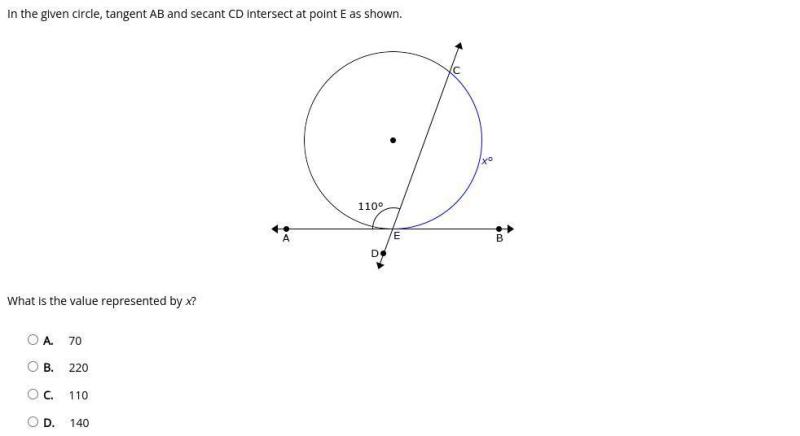
The Complete Overview of Tangent-Circle Relationships
The statement "AB is tangent to circle C at point B" is a shorthand for a geometric truth with profound implications. In Euclidean space, a tangent line to a circle shares exactly one point with the circle’s circumference, and at that instant, the line’s slope mirrors the circle’s curvature. This isn’t just a theoretical curiosity—it’s a practical constraint used in computer graphics to render smooth surfaces, in robotics to navigate obstacle courses, and in optics to design lenses. The key lies in the perpendicularity condition: the radius OB (where O is the circle’s center) forms a 90-degree angle with AB, ensuring the line just "kisses" the circle without penetrating.What makes this relationship unique is its duality. From a purely mathematical standpoint, the tangent represents the limit of a secant line as its two intersection points converge into one. Yet in applied contexts, it’s a design principle. Architects leverage it to create seamless transitions between flat and curved surfaces, while mechanical engineers use it to minimize friction in rotating parts. Even in nature, the tangent principle emerges in the way water droplets bead on a lotus leaf or how a soap bubble’s surface tension maintains a perfect spherical shape—until a tangent plane disturbs it.
Historical Background and Evolution
The concept of tangents predates formal geometry. Ancient Greek mathematicians like Euclid (c. 300 BCE) and Archimedes (c. 250 BCE) explored tangents to circles as part of their work on conic sections and area calculations. Euclid’s Elements (Book III, Proposition 16) proves that a tangent is perpendicular to the radius at the point of contact—a rule still taught today. Meanwhile, Archimedes used tangents to approximate the circumference of a circle, laying groundwork for calculus centuries later. The term "tangent" itself derives from the Latin tangere, meaning "to touch," reflecting its intuitive definition.By the Renaissance, artists and engineers adopted tangent principles to bridge theory and practice. Leonardo da Vinci sketched geometric constructions where tangents defined the curvature of arches, while Galileo applied them to study projectile motion. The 17th century’s advent of calculus—with Isaac Newton and Gottfried Leibniz—elevated tangents to a new dimension. They became the foundation for derivatives, where the slope of a tangent line at a point on a curve gives its instantaneous rate of change. Today, "AB is tangent to circle C at point B" isn’t just a geometry problem; it’s a universal language for modeling change, from stock market trends to climate data.
Core Mechanisms: How It Works
The mechanics of a tangent line hinge on two non-negotiable conditions:1. Single Point of Contact: The line AB intersects circle C at exactly B, with no other solutions to the equation defining their intersection.
2. Perpendicularity: The radius OB is perpendicular to AB at B, creating a right angle. This ensures the line doesn’t cross the circle’s boundary.
Table of Contents
- The Complete Overview of Tangent-Circle Relationships
- Historical Background and Evolution
- Core Mechanisms: How It Works
- Key Benefits and Crucial Impact
- Major Advantages
- Comparative Analysis
- Future Trends and Innovations
- Conclusion
- Comprehensive FAQs
- Q: Can a tangent line ever intersect a circle at more than one point?
- Q: How do you prove that the radius is perpendicular to the tangent at the point of contact?
- Q: What’s the difference between a tangent and a normal line to a circle?
- Q: Are there real-world examples where tangent lines are critical?
- Q: How is the tangent concept extended to spheres in 3D space?
- Q: Can a tangent line exist for other shapes besides circles?
Mathematically, if the circle’s equation is (x – h)² + (y – k)² = r² (center (h,k), radius r), and the line AB has slope m passing through B = (x₁, y₁), the condition for tangency is that the system of equations has one unique solution. This translates to the distance from the center (h,k) to the line AB equaling the radius r. The perpendicularity condition arises from the gradient condition: the slope of the radius ((y₁ – k)/(x₁ – h)) must be the negative reciprocal of m, enforcing the 90-degree angle.
In three-dimensional space, the concept extends to tangent planes to spheres, where the same perpendicularity rule applies but in a plane perpendicular to the radius. This principle underpins computer-aided design (CAD) software, where algorithms must determine whether a line or surface "touches" a curve without intersecting it—a critical step in manufacturing everything from airplane wings to dental implants.
Key Benefits and Crucial Impact
The practical value of "AB is tangent to circle C at point B" lies in its precision. Unlike approximations, tangents provide exact solutions—whether calculating the shortest path around a circular obstacle or determining the optimal angle for a satellite’s signal reception. In engineering, this means reducing material waste by designing parts with minimal contact points, while in robotics, it enables robots to navigate edges without collision. Even in medicine, MRI machines use tangent principles to reconstruct 3D images from 2D slices.The impact isn’t limited to hard sciences. Art and design exploit tangents to create illusions of depth—think of the way a tangent line can make a flat surface appear curved. In music, the harmonic series (where overtones are tangent to fundamental frequencies) relies on similar mathematical relationships. The ubiquity of this concept stems from its universal applicability: any system with boundaries, whether physical or abstract, can be analyzed using tangent-based models.
"Geometry will draw the soul toward truth and create the spirit of philosophy." — Plato
Major Advantages
- Exact Solutions: Tangents provide precise intersection points, eliminating guesswork in engineering and physics calculations.
- Optimization: Minimizing contact points reduces friction, energy loss, and material costs in mechanical systems.
- Visual Realism: In graphics and animation, tangent lines ensure smooth transitions between shapes, enhancing realism.
- Theoretical Foundation: The perpendicularity rule underpins calculus, enabling modeling of dynamic systems like fluid flow or population growth.
- Cross-Disciplinary Utility: From architecture to astrophysics, the principle applies wherever curves and lines interact.

Comparative Analysis
| Property | Tangent Line (AB to Circle C) | Secant Line (Intersects Circle Twice) |
|---|---|---|
| Intersection Points | Exactly one (B) | Two distinct points |
| Angle with Radius | 90 degrees (perpendicular) | Varies; not fixed |
| Equation Condition | Distance from center = radius (unique solution) | Quadratic equation with two real roots |
| Applications | Optimization, CAD, physics boundaries | Chord length calculations, circle geometry proofs |
Future Trends and Innovations
As technology advances, the role of tangent-based models will expand. In quantum computing, tangents may help visualize wavefunctions and probability amplitudes, where particles exist in "tangent-like" states of superposition. AI-driven design will increasingly rely on tangent algorithms to generate organic, efficient structures—imagine buildings shaped by real-time tangent optimizations for wind resistance. Even in biology, researchers are using tangent principles to model the growth patterns of cells and tissues, where contact inhibition (a tangent-like boundary condition) dictates how cells divide.The next frontier may lie in higher-dimensional tangents. While we’re accustomed to 2D and 3D tangents, future applications in 4D spacetime physics or hyperdimensional data analysis could redefine how we interpret "AB is tangent to circle C at point B". As computational power grows, these concepts will move from theoretical curiosity to actionable tools, reshaping industries from nanotechnology to urban planning.

Conclusion
The statement "AB is tangent to circle C at point B" is more than a geometric fact—it’s a keystone of precision across disciplines. Its historical roots in Greek mathematics, its mechanical applications in modern engineering, and its theoretical depth in calculus all converge on a single truth: tangents are the bridge between abstract ideas and real-world solutions. Whether you’re designing a bridge, rendering a 3D animation, or modeling a cosmic phenomenon, this principle ensures that lines and curves interact with uncompromising accuracy.The beauty of the tangent lies in its simplicity and power. It’s a reminder that some of the most useful ideas in science and art are those that seem obvious once explained—yet were revolutionary when first discovered. As fields evolve, the legacy of "AB is tangent to circle C at point B" will continue to grow, proving that geometry isn’t just about shapes. It’s about how the world fits together.
Comprehensive FAQs
Q: Can a tangent line ever intersect a circle at more than one point?
A: No. By definition, a tangent touches the circle at exactly one point. If a line intersects a circle twice, it’s classified as a secant, not a tangent.
Q: How do you prove that the radius is perpendicular to the tangent at the point of contact?
A: Assume the radius OB is not perpendicular. Then, a smaller arc could be drawn within the circle, contradicting the definition of the tangent as the shortest distance from the line to the center. Alternatively, use calculus: the derivative of the circle’s equation at B gives the tangent’s slope, which is perpendicular to the radius.
Q: What’s the difference between a tangent and a normal line to a circle?
A: A normal line is perpendicular to the tangent at the point of contact. While the tangent touches the circle at one point, the normal passes through that point and the circle’s center, aligning with the radius.
Q: Are there real-world examples where tangent lines are critical?
A: Yes. In rollercoaster design, tangent lines determine the smoothness of transitions between curves. In optics, the tangent plane of a lens affects how light refracts. Even in sports, a tennis player’s racket string tension is optimized using tangent principles to maximize ball control.
Q: How is the tangent concept extended to spheres in 3D space?
A: In three dimensions, a tangent plane to a sphere at point B is a flat surface that touches the sphere only at B and is perpendicular to the radius OB. This extends the 2D tangent line’s properties into higher dimensions, used in CAD modeling and physics simulations.
Q: Can a tangent line exist for other shapes besides circles?
A: Yes. Ellipses, parabolas, and hyperbolas also have tangent lines, though the conditions vary. For example, a tangent to a parabola has exactly one intersection point and satisfies the parabola’s derivative condition at that point.
Leave a Comment
Comments are moderated before appearing. The data you submit is processed according to the Privacy Policy of kiwiirc.com.