The Hidden Math Behind Finding the Lowest Common Multiple of 9 and 8
The search for the lowest common multiple of 9 and 8 isn’t just an abstract exercise—it’s a gateway to understanding how numbers interact in structured systems. At its core, this calculation reveals the smallest number divisible by both integers, a principle that underpins everything from scheduling algorithms to cryptographic protocols. The elegance lies in its simplicity: a fundamental operation that bridges arithmetic theory with practical applications.
Yet, beneath the surface, this problem exposes deeper mathematical truths. The numbers 9 and 8, though small, embody the tension between odd and even divisibility, prime factors, and the efficiency of computational methods. Their least common multiple (LCM) isn’t merely a solution—it’s a lens through which to examine the logic of repetition, periodicity, and synchronization in mathematics and beyond.
What makes this calculation particularly fascinating is its dual role: as both a pedagogical tool and a functional necessity. Teachers use it to illustrate prime factorization, while engineers rely on it to optimize resource allocation. The LCM of 9 and 8, when broken down, becomes a microcosm of how mathematical principles scale from classroom exercises to high-stakes real-world scenarios.

The Complete Overview of the Lowest Common Multiple of 9 and 8
The lowest common multiple of 9 and 8 is the smallest positive integer that both numbers divide into without leaving a remainder. For 9 and 8, this value is 72, derived through systematic methods that prioritize efficiency and accuracy. This result isn’t arbitrary—it emerges from the interplay of their prime components: 9 factors into \(3^2\), while 8 breaks down into \(2^3\). The LCM is then the product of the highest powers of all primes present, ensuring divisibility by both original numbers.What distinguishes this calculation from others is its reliance on prime factorization, a technique that transforms complex problems into manageable steps. Unlike brute-force methods (listing multiples until a match is found), prime decomposition offers a scalable approach, particularly useful when dealing with larger numbers or systems requiring rapid computation. The LCM of 9 and 8 serves as a benchmark: a simple yet rigorous example of how theoretical constructs translate into actionable solutions.
Historical Background and Evolution
The concept of the lowest common multiple traces back to ancient mathematical traditions, where scholars like Euclid and later Indian mathematicians formalized divisibility rules. The need to find common denominators in fractions or synchronize repeating cycles (such as planetary motions) drove early developments. By the 19th century, number theory systematized these ideas, with Gauss and others refining algorithms for LCM and greatest common divisor (GCD) calculations.The LCM of 9 and 8 reflects this evolution: a modern application of ancient logic. While early mathematicians might have relied on trial-and-error multiplication tables, contemporary methods leverage prime factorization or the Euclidean algorithm for GCD, then apply the relationship \( \text{LCM}(a, b) = \frac{|a \times b|}{\text{GCD}(a, b)} \). This dual approach—historical intuition meets computational efficiency—demonstrates how mathematical problems adapt without losing their foundational integrity.
Core Mechanisms: How It Works
To compute the least common multiple of 9 and 8, two primary methods dominate: prime factorization and the GCD-based formula. The former decomposes each number into its prime components:Table of Contents
- The Complete Overview of the Lowest Common Multiple of 9 and 8
- Historical Background and Evolution
- Core Mechanisms: How It Works
- Key Benefits and Crucial Impact
- Major Advantages
- Comparative Analysis
- Future Trends and Innovations
- Conclusion
- Comprehensive FAQs
- Q: Why is the lowest common multiple of 9 and 8 equal to 72?
- Q: Can the LCM of two numbers be smaller than either number?
- Q: How does the LCM relate to the greatest common divisor (GCD)?
- Q: What real-world applications rely on the LCM of 9 and 8?
- Q: Are there alternative methods to find the LCM of 9 and 8?
- Q: How does the LCM of 9 and 8 differ from their product?
The LCM is then the product of the highest exponents of all primes involved: \(2^3 \times 3^2 = 8 \times 9 = 72\). This method ensures no prime is overlooked, guaranteeing divisibility by both original numbers.
Alternatively, the GCD-based approach first calculates the greatest common divisor of 9 and 8 (which is 1, since they share no common prime factors). Using the formula \( \text{LCM}(a, b) = \frac{a \times b}{\text{GCD}(a, b)} \), the result is \( \frac{9 \times 8}{1} = 72 \). Both methods converge on the same answer, but their choice depends on context: prime factorization excels in educational settings, while the GCD formula is favored in programming for its computational speed.
Key Benefits and Crucial Impact
The lowest common multiple of 9 and 8 transcends its numerical result—it embodies a principle critical to fields ranging from cryptography to urban planning. In computer science, LCM calculations optimize scheduling algorithms, ensuring tasks align with periodic constraints. Engineers use it to synchronize mechanical systems, where timing discrepancies can lead to catastrophic failures. Even in everyday life, understanding LCM helps in coordinating events with repeating intervals, such as billing cycles or calendar alignments.The elegance of this concept lies in its universality. Whether applied to simple arithmetic or complex systems, the LCM of 9 and 8 illustrates how mathematical abstraction solves tangible problems. Its relevance extends to:
"Mathematics is the art of giving the same name to different things." — Henri Poincaré
The lowest common multiple of 9 and 8 is a testament to this idea—two distinct numbers unified under a single, precise solution.
Major Advantages
- Precision in Divisibility: The LCM guarantees the smallest number divisible by both inputs, eliminating redundancy in calculations.
- Efficiency in Computation: Prime factorization and GCD methods reduce time complexity, crucial for large-scale applications.
- Versatility Across Disciplines: From cryptography to logistics, LCM principles adapt to diverse problem domains.
- Pedagogical Foundation: Mastery of LCM builds skills in factorization, divisibility, and algorithmic thinking.
- Real-World Synchronization: Applications in scheduling, engineering, and data processing rely on LCM for consistency.

Comparative Analysis
| Method | Advantages |
|---|---|
| Prime Factorization | Direct, intuitive, and educational; ideal for manual calculations. |
| GCD-Based Formula | Faster for programming; leverages efficient GCD algorithms. |
| Brute-Force Multiplication | Simple for small numbers but impractical for large-scale use. |
| Modular Arithmetic Extensions | Useful in advanced cryptography but overkill for basic LCM problems. |
Future Trends and Innovations
As computational demands grow, the lowest common multiple of 9 and 8 will continue to evolve alongside algorithmic optimizations. Machine learning models may soon automate LCM calculations for complex datasets, while quantum computing could revolutionize prime factorization speed. In education, interactive tools will likely replace rote memorization, emphasizing conceptual understanding over procedural steps.The future of LCM lies in its intersection with emerging technologies. For instance, blockchain systems use LCM-like principles to synchronize consensus mechanisms, and AI-driven scheduling tools rely on these concepts to minimize resource conflicts. The LCM of 9 and 8, once a static exercise, is becoming a dynamic component of adaptive systems.
Conclusion
The lowest common multiple of 9 and 8 is more than a numerical answer—it’s a reflection of mathematical harmony. By dissecting its calculation methods, historical roots, and practical applications, we uncover a principle that bridges theory and utility. Whether in a classroom or a high-performance server, this concept remains a cornerstone of logical problem-solving.Its enduring relevance underscores a broader truth: mathematics is not just about numbers but about the patterns that connect them. The LCM of 9 and 8 is a microcosm of this connection—a reminder that even the simplest questions can reveal profound insights.
Comprehensive FAQs
Q: Why is the lowest common multiple of 9 and 8 equal to 72?
The LCM is determined by taking the highest powers of all primes in the factorizations of 9 (\(3^2\)) and 8 (\(2^3\)). Multiplying these gives \(2^3 \times 3^2 = 8 \times 9 = 72\), the smallest number divisible by both.
Q: Can the LCM of two numbers be smaller than either number?
No. The LCM must be at least as large as the larger of the two numbers. For example, the LCM of 9 and 8 (72) exceeds both 9 and 8.
Q: How does the LCM relate to the greatest common divisor (GCD)?
The LCM of two numbers can be calculated using their GCD with the formula: \( \text{LCM}(a, b) = \frac{a \times b}{\text{GCD}(a, b)} \). For 9 and 8, since their GCD is 1, the LCM simplifies to \(9 \times 8 = 72\).
Q: What real-world applications rely on the LCM of 9 and 8?
While 9 and 8 are small, their LCM demonstrates principles used in scheduling (e.g., aligning recurring tasks), cryptography (e.g., key synchronization), and engineering (e.g., gear ratios in mechanical systems).
Q: Are there alternative methods to find the LCM of 9 and 8?
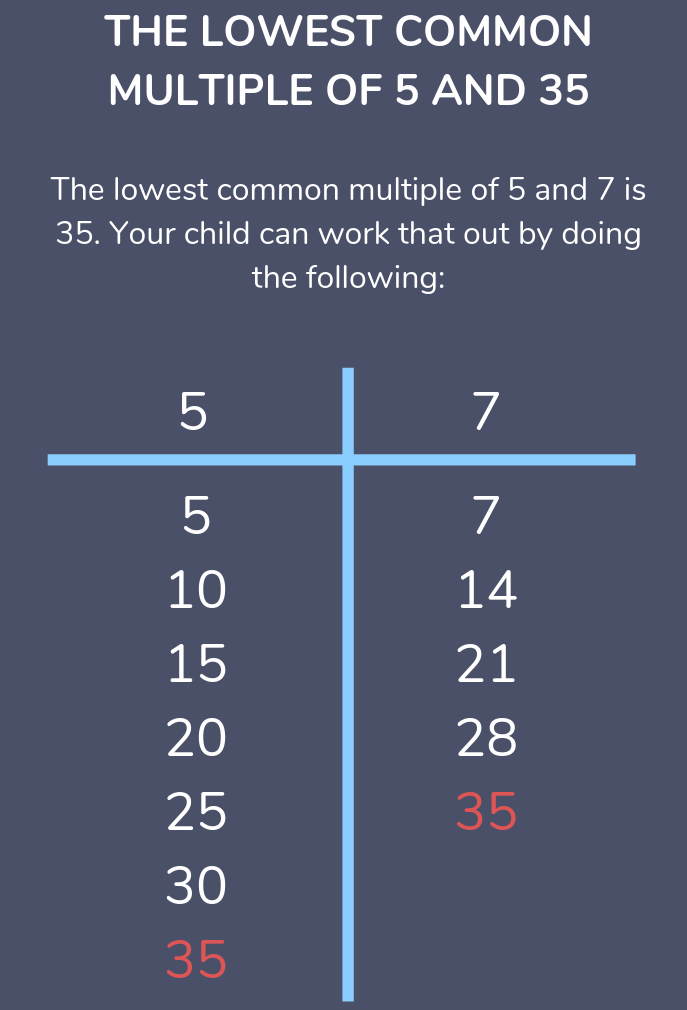
Yes. Besides prime factorization and the GCD formula, one could list multiples of 9 (9, 18, 27, 36, 45, 54, 63, 72, ...) and 8 (8, 16, 24, 32, 40, 48, 56, 64, 72, ...) until finding the smallest common number, which is 72.
Q: How does the LCM of 9 and 8 differ from their product?
The product of 9 and 8 is 72, which coincidentally equals their LCM in this case. However, for numbers with common factors (e.g., 6 and 8), the product (48) is larger than the LCM (24). The LCM is always the smallest such number.
Leave a Comment
Comments are moderated before appearing. The data you submit is processed according to the Privacy Policy of kiwiirc.com.